Stock that tells the truth
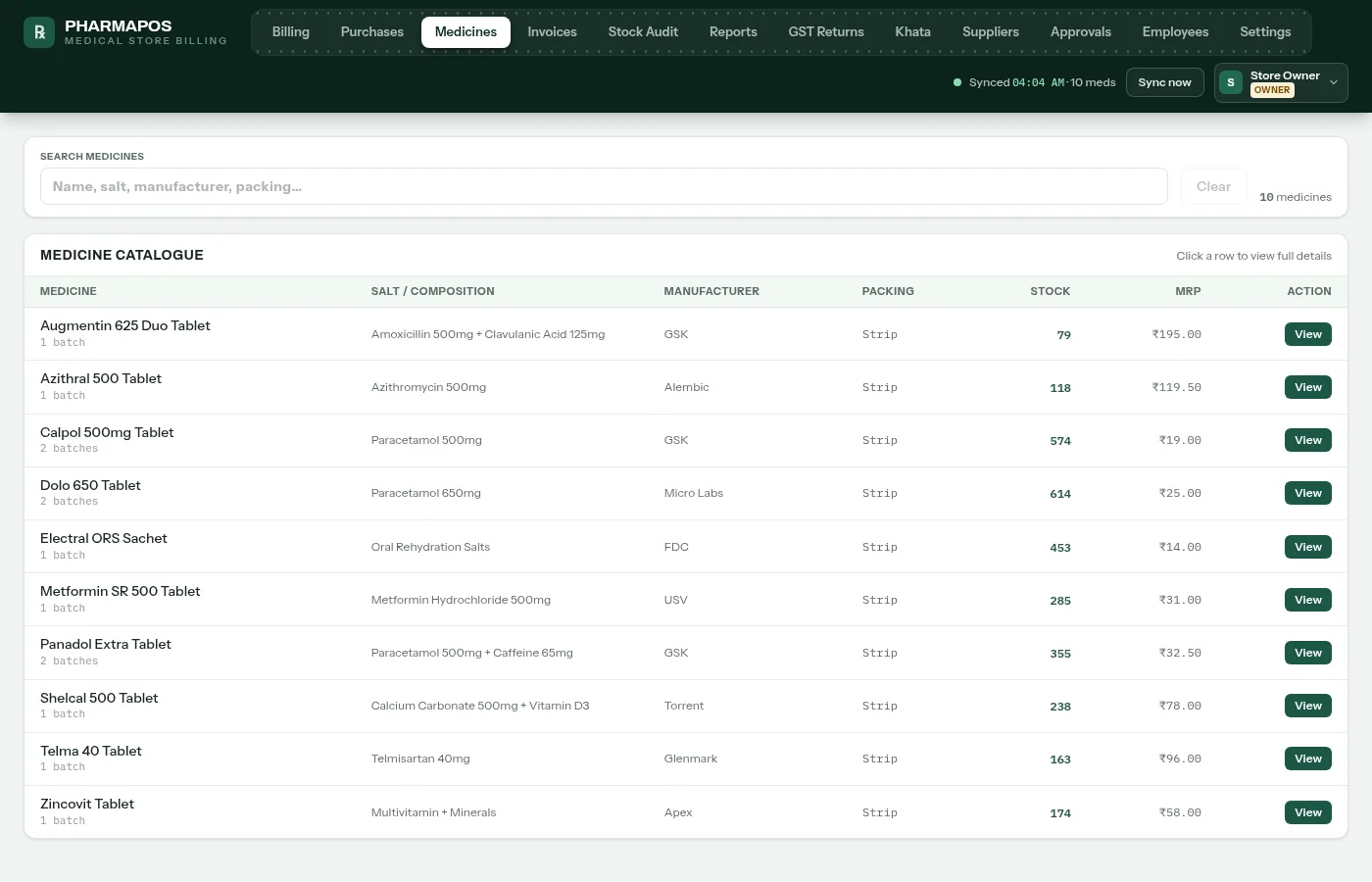
Every medicine in PharmaPOS is a catalogue entry (name, manufacturer, pack size, HSN, GST rate, MRP) plus its stock lines (batch, expiry, quantity, location). That split is what makes the reports trustworthy: the catalogue says what you sell, the batches say what is actually in the shop, and the two never get mixed.
- Near-expiry view: batches approaching their date, so they can be pushed, exchanged with the distributor or returned before they become a write-off.
- Low-stock list: what needs reordering, based on the levels you set per medicine.
- Value at risk: the rupee value sitting in batches that are close to expiry — the number that decides a discount or a return.
- Location-wise stock: if you keep a godown behind the shop or a second counter upstairs, stock moves between locations instead of getting lost.
Purchases, suppliers and the money you owe
Purchase entries are recorded invoice by invoice with batch, expiry, quantity and free or bonus quantity — so the landed cost you see is the cost you actually paid, not the printed rate. Supplier ledgers keep the running balance, purchase requests carry the counter's demand to the owner, and every purchase sits in the approvals queue until the owner signs off.
Credit cycles with distributors are a fact of pharmacy life. A ledger that shows what was bought, what was returned and what is still owed turns the month-end argument into a two-minute look-up.
Khata for the regulars
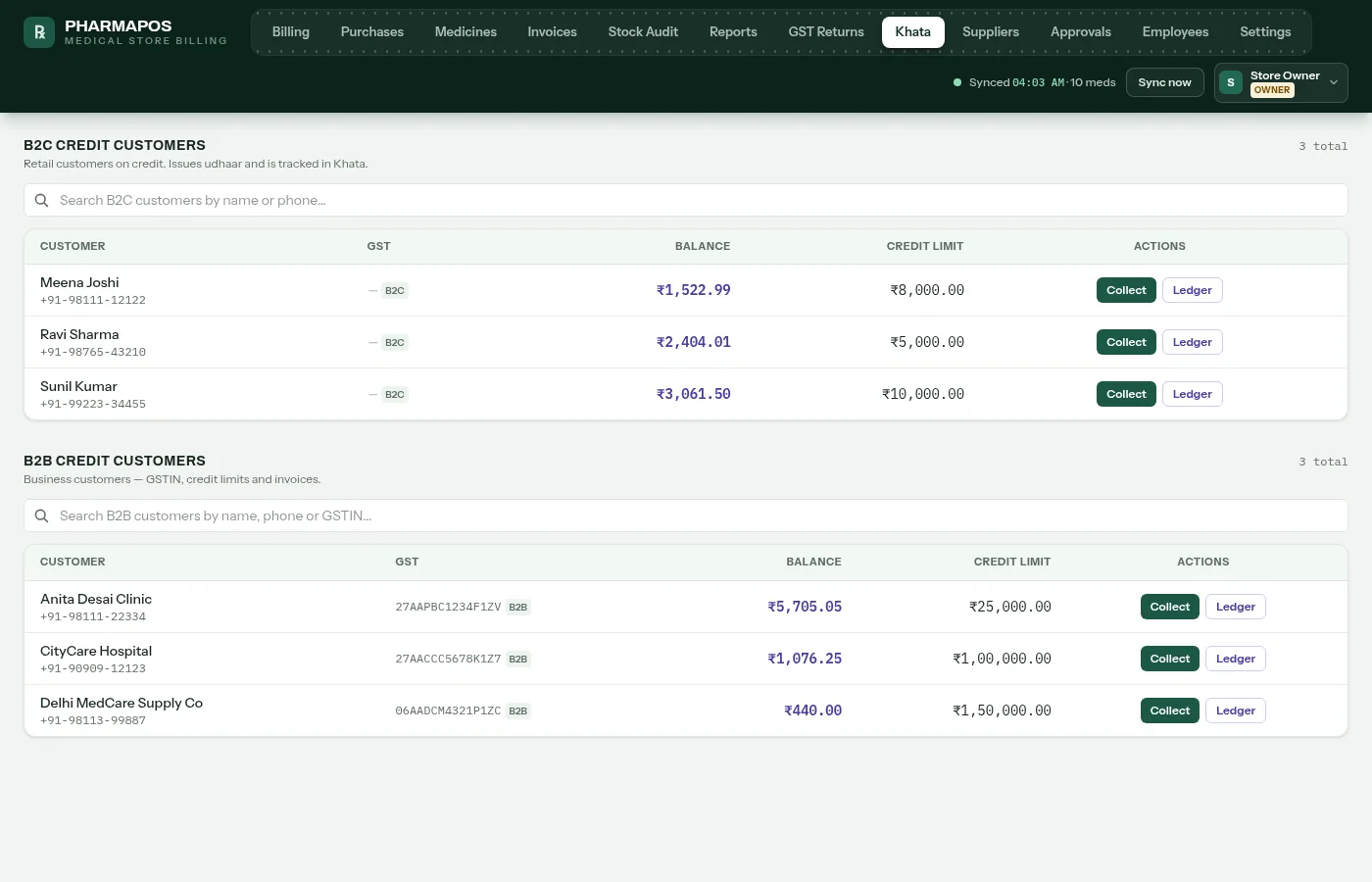
Half the neighbourhood buys on credit. Customer ledgers track balances, running credit and limits, so a customer over their limit is visible at the counter instead of at month end. Balances move with sales, returns and payments, and the statement is one screen.
Reports you will actually open
Profit, margin, revenue, batch, expiry, customer, medicine, units, balance and value at risk — the day-to-day set, computed locally by period, by location and by counter. A stock audit screen reconciles the shelf against the books so the physical count is an afternoon's work rather than a month-end panic. Everything is exportable, and the numbers come from the same database the counter bills on.
Because the database is local, a report loads instantly and works in a power cut on a laptop battery. Nothing about stock control depends on the cloud being awake.